

Survival through Quality
PRODUCT CENTER
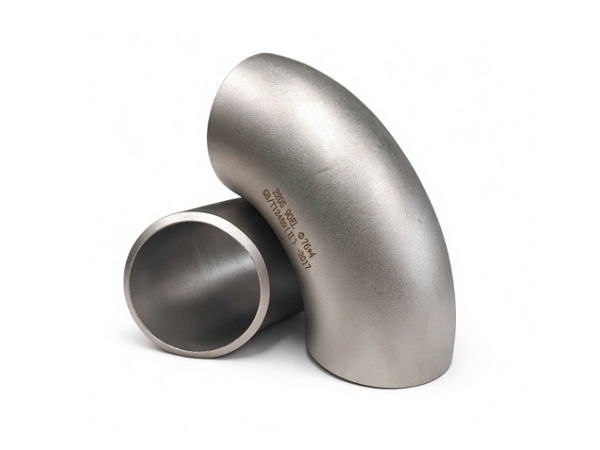
Alloy steel elbow
What is an Alloy Steel Elbow?
An alloy steel elbow is a high-temperature, high-strength butt-welded fitting used to change flow direction in piping systems operating at elevated temperatures. Made from chromium-molybdenum alloy steel, it resists creep, oxidation, and graphitization under sustained heat and pressure. Alloy steel elbows are essential in refineries, power plants, and petrochemical units where carbon steel would lose strength or fail prematurely.
Standards and Specifications
Alloy steel elbows are manufactured to ASME B16.9 and ASME B16.28, conforming to ASTM A234 WP11/WP22/WP91 and MSS SP-75. Available in 45, 90, and 180 degree angles, long radius and short radius patterns. Sizes range from NPS 1/2 to NPS 48, with wall schedules from SCH 40 to SCH XXS. Ends are beveled for butt welding per standard dimensions.
Materials and Grades
Common grades include ASTM A234 WP11 (1.25Cr-0.5Mo), WP22 (2.25Cr-1Mo), and WP91 (9Cr-1Mo-V). These chromium-molybdenum grades provide excellent high-temperature strength, creep resistance, and oxidation resistance. WP91 in particular is used in supercritical boiler service. All material is normalized or normalized-and-tempered to ensure mechanical properties.
Pressure and Temperature Ratings
Alloy steel elbows are rated for pressure classes 150 through 2500, with continuous service temperatures up to 600 degrees Celsius and beyond depending on grade. Chrome-moly grades maintain strength under long-term heat and pressure, resisting graphitization and creep. Each elbow is heat-treated and hydrostatically tested.
Applications
Alloy steel elbows are used in refinery catalytic reforming and hydrocracking units, power plant boiler and steam piping, superheater and reheater circuits, high-temperature process lines, and heat exchanger systems. They are specified wherever sustained high temperature and pressure would exceed the capability of carbon steel fittings.
Advantages
Alloy steel elbows offer superior high-temperature strength, creep resistance, and oxidation resistance compared with carbon steel. They maintain integrity under long-term thermal cycling and pressure fluctuations. The butt-welded joint provides full structural continuity. Chrome-moly fittings are essential for safety in high-temperature energy applications.
Installation Guidelines
Alloy steel elbows require careful welding procedure control. Preheat to the specified temperature (typically 150-250 degrees Celsius) before welding. Use matching alloy filler metal (ER80S-B2 for WP11, ER90S-B3 for WP22). Post-weld heat treatment (PWHT) at 650-720 degrees Celsius is mandatory to relieve residual stresses. Radiographic and hardness testing verify weld quality.
Quality Assurance
Each alloy steel elbow is marked with grade, heat number, size, wall thickness, and manufacturer's stamp. Inspection includes PMI, hardness testing, dimensional checks, ultrasonic examination, and hydrostatic testing. Material test certificates to EN 10204 3.1 or 3.2 are provided. Elbows are coated with high-temperature primer and bevel ends are protected for shipping.