

Survival through Quality
PRODUCT CENTER
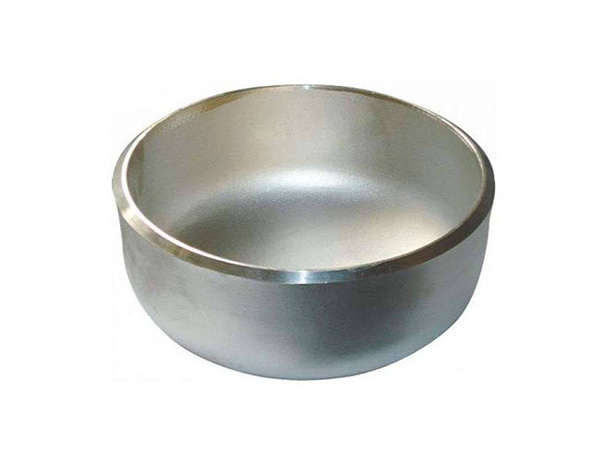
Alloy Pipe Cap
What is an Alloy Steel Pipe Cap?
An alloy steel pipe cap is a pressure-containing fitting used to seal the end of a pipe, stopping flow and providing a pressure-tight closure. It is typically forged or machined from alloy steel and welded onto the pipe end. Alloy steel caps are engineered for high-temperature and high-pressure services where carbon steel would creep or lose strength, making them essential in refineries, power plants, and petrochemical processing.
Standards and Specifications
Alloy steel pipe caps are manufactured to ASME B16.9 for factory-made butt-welding fittings, and ASME B16.28 for shortened radius elbows and returns. They also conform to MSS SP-75, ASTM A234, and ASTM A420 specifications. Sizes range from 1/2 inch to 48 inches (DN15 to DN1200), with wall schedules from STD to XXS. Common types include concentric and eccentric caps, with either flat or dished ends depending on pressure rating.
Materials and Grades
Alloy steel pipe caps are available in grades such as ASTM A234 WP11, WP12, WP22, and WP91 for high-temperature service. ASTM A420 WPL6 and WPL3 are used for low-temperature applications. Chrome-molybdenum grades like P11, P22, and P91 provide excellent creep resistance and high-temperature strength. These materials are widely specified in power boiler piping, steam lines, and refinery process units.
Pressure and Temperature Ratings
Alloy steel caps are rated for high-temperature services up to 600 degrees Celsius and beyond, depending on grade and wall thickness. Chrome-moly grades maintain strength under sustained heat and pressure, resisting graphitization and creep. Each cap is normalized or normalized-and-tempered to ensure mechanical properties, and hydrostatically tested to verify pressure integrity.
Applications
Alloy steel pipe caps are used in oil refineries, petrochemical plants, power generation boilers, steam piping, high-temperature process lines, and heat exchanger systems. They seal the ends of headers, branch connections, and equipment nozzles where extreme temperature and pressure conditions demand alloy-grade material rather than standard carbon steel.
Advantages
Alloy steel caps offer superior high-temperature strength, creep resistance, and corrosion resistance compared with carbon steel. They maintain integrity under long-term thermal cycling and pressure fluctuations. The butt-welded joint provides full-penetration strength aligned with the pipe, eliminating leak paths and allowing radiographic inspection of the weld.
Installation Guidelines
Prepare the pipe end with a standard bevel, align the cap, and tack weld in position. Preheat to the specified temperature before welding, and use matching alloy filler metal. Post-weld heat treatment (PWHT) is typically required to relieve residual stresses and restore material properties. After welding, perform radiographic or ultrasonic examination and hydrostatic testing as required.
Quality Assurance
Each alloy steel cap is marked with grade, heat number, size, wall thickness, and manufacturer's stamp. Inspection includes chemical analysis, mechanical testing, hardness testing, dimensional checks, and NDE. Material test certificates to EN 10204 3.1 or 3.2 are provided. Products are packaged in wooden cases for export shipment.