

Survival through Quality
PRODUCT CENTER
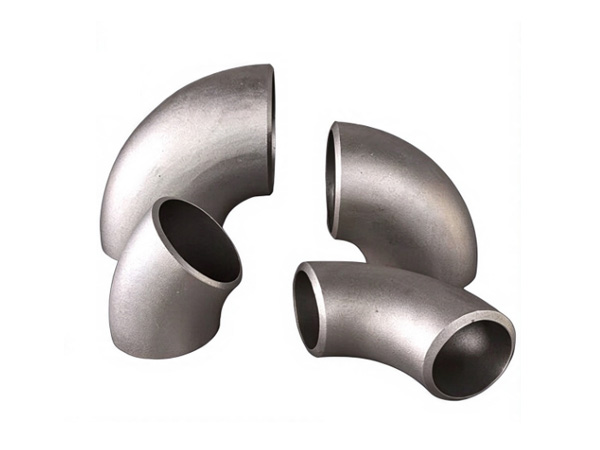
Pipeline elbow
What is a Pipeline Elbow?
A pipeline elbow is a long-radius butt-welded fitting designed for use in long-distance oil, gas, and slurry transmission pipelines. Manufactured with a large bend radius (typically R=5D or R=8D), it provides a smooth gradual direction change that minimizes pressure drop, erosion, and turbulence. Pipeline elbows are engineered to withstand high pressure, buried service, and ground movement over decades of operation.
Standards and Specifications
Pipeline elbows are manufactured to ASME B16.9, ASME B16.28, and API 5L specifications for pipeline service. They also conform to CSA Z245.1 and DNV standards. Long radius (R=1.5D) and extra long radius (R=3D, 5D, 8D) patterns are available. Sizes range from NPS 4 to NPS 48 (DN100 to DN1200), with wall thicknesses up to XXS and beyond. Ends beveled for field butt welding.
Materials and Grades
Common grades are API 5L X42, X52, X60, X65, X70, and X80 line pipe steel. These high-strength low-alloy steels provide good toughness and weldability for buried pipeline service. Coated elbows with fusion-bonded epoxy (FBE) or three-layer polyethylene (3LPE) are available for corrosion protection. Low-temperature Charpy impact values are specified for cold-climate pipelines.
Pressure and Design Considerations
Pipeline elbows are designed for high-pressure transmission service, typically up to ANSI Class 900 or equivalent. The long bend radius reduces stress concentration and fatigue from pressure cycling and ground movement. Wall thickness is calculated per ASME B31.4 or B31.8 pipeline codes, with corrosion allowance included. Each elbow is hydrostatically tested and coated for buried service.
Applications
Pipeline elbows are used in crude oil transmission lines, natural gas pipelines, refined product pipelines, slurry pipelines, and water transmission mains. They redirect the pipeline route around terrain, rivers, roads, and obstacles. They are also used in compressor stations, pump stations, and terminal manifold piping.
Advantages
The long-radius bend minimizes flow resistance, reducing pumping energy and operating cost. The gradual curvature reduces erosion from entrained solids and extends internal coating life. High-strength line pipe steel provides burst pressure margin for safe transmission. Factory-applied coating ensures long-term corrosion protection in buried service.
Installation Guidelines
Pipeline elbows are welded in the field using automatic or semi-automatic butt welding. The bevel is prepared for full-penetration girth welds. Apply field joint coating after welding and NDE. Allow for thermal expansion and provide proper support or anchor blocks as required. Backfill carefully to avoid damaging the external coating.
Quality Assurance
Each pipeline elbow is marked with grade, heat number, size, wall thickness, bend radius, and manufacturer's stamp. Inspection includes dimensional checks, ultrasonic testing, Charpy impact testing, hydrostatic testing, and coating inspection. Material test certificates and coating certificates are provided per project specifications.