

Survival through Quality
PRODUCT CENTER
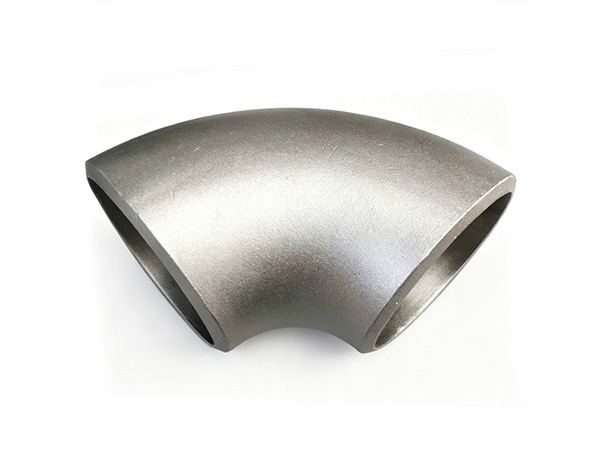
High pressure elbow
What is a High Pressure Elbow?
A high pressure elbow is a heavy-duty butt-welded fitting designed to redirect flow in piping systems rated for extreme pressure classes. Built with thick walls and precision-formed bends, it maintains pressure integrity under severe operating conditions. High pressure elbows are specified in Class 900, 1500, and 2500 systems where standard fittings cannot provide adequate pressure containment and safety margin.
Standards and Specifications
High pressure elbows are manufactured to ASME B16.9 and ASME B16.28, with additional requirements per ASME B31.3 and project piping specifications. They also conform to MSS SP-75 and ASTM A234. Sizes range from NPS 1/2 to NPS 24, available in 45, 90, and 180 degree angles. Wall thickness is calculated for the design pressure and temperature, with controlled thinning at the bend.
Materials and Grades
Carbon steel A234 WPB and A105 are used for moderate-temperature high-pressure service. Alloy steel WP11, WP22, and WP91 grades handle high-temperature high-pressure applications in power and refinery service. Stainless steel 304/316 grades provide corrosion resistance in pressure chemical systems. Forged construction is available for the smallest and highest pressure sizes.
Pressure and Temperature Ratings
High pressure elbows are rated for Class 900, 1500, and 2500 pressure classes, with temperature de-rating per ASME B16.5 tables. Carbon steel elbows handle up to 425 degrees Celsius, alloy steel elbows up to 600 degrees Celsius. Each elbow is hydrostatically tested at 1.5 times the rated pressure and ultrasonically examined.
Applications
High pressure elbows are used in high-pressure oil and gas gathering, injection wells, refinery catalytic units, power plant superheater and reheater piping, hydraulic pressure systems, hydrogen service, and high-pressure steam lines. They redirect flow in thick-wall headers and process lines where pressure containment is a critical safety requirement.
Advantages
The heavy-wall design provides a substantial safety margin against burst pressure and fatigue from pressure cycling. Precision forming ensures consistent wall thickness and uniform stress distribution through the bend. The butt-welded joint, when radiographically inspected, provides full structural integrity. High pressure elbows are essential for safe operation in extreme pressure service.
Installation Guidelines
High pressure elbows require precise bevel preparation with proper root face and groove angle. Preheat to the specified temperature based on material and wall thickness. Use multi-pass welding with controlled interpass temperature and matching filler metal. Post-weld heat treatment is mandatory for alloy steel and thick carbon steel sections. Perform 100 percent radiographic examination of the welds and hydrostatically test the completed system.
Quality Assurance
Each high pressure elbow is marked with grade, heat number, size, wall thickness, pressure class, and manufacturer's stamp. Inspection includes PMI, ultrasonic thickness measurement, dimensional checks, hardness testing, 100 percent NDE, and hydrostatic testing. Material test certificates to EN 10204 3.2 are available for critical service. Elbows are coated with rust-preventive oil and bevel ends are capped for shipping.