

Survival through Quality
PRODUCT CENTER
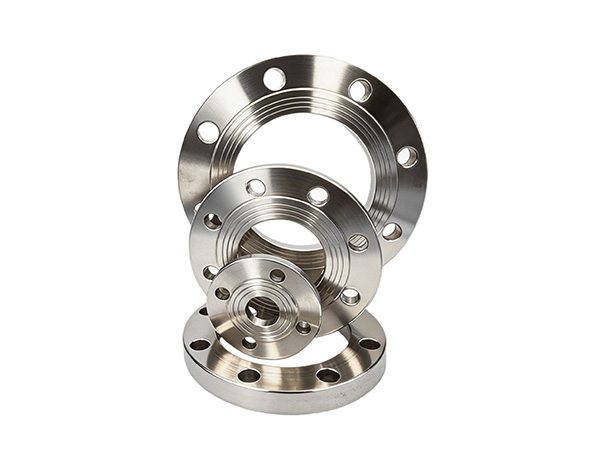
Stainless Steel Flange
What is a Stainless Steel Flange?
A stainless steel flange is a forged or cast ring used to connect pipes, valves, and equipment in bolted joints where corrosion resistance is required. Made from austenitic or duplex stainless steel, it resists oxidation, chemical attack, and pitting while maintaining good mechanical strength. Stainless steel flanges are specified in chemical, food, pharmaceutical, marine, and clean-service piping where carbon steel would corrode or contaminate the process.
Standards and Specifications
Stainless steel flanges are manufactured to ASME B16.5, ASME B16.47, EN 1092, and DIN standards. Types include weld neck, slip-on, threaded, socket weld, lap joint, and blind. Sizes range from NPS 1/2 to NPS 48, with pressure classes 150, 300, 600, 900, 1500, and 2500. Faces include raised face (RF), flat face (FF), and ring type joint (RTJ) for high pressure.
Materials and Grades
Common grades are ASTM A182 F304/F304L and F316/F316L. F304/304L provides general corrosion resistance for food, beverage, and architectural use. F316/316L adds molybdenum for superior pitting and chloride resistance in marine and chemical service. Other grades include F321, F347, F904L, and duplex F51/F55 for specialized high-temperature or severe corrosive environments.
Pressure and Temperature Ratings
Stainless steel flanges perform from cryogenic temperatures up to approximately 800 degrees Celsius for austenitic grades, with pressure classes 150 through 2500. Low-carbon L grades provide better intergranular corrosion resistance after welding. Flanges are solution-annealed and pickled to maximize corrosion resistance. Pressure-temperature ratings follow ASME B16.5 with stainless steel derating factors.
Applications
Stainless steel flanges are used in chemical processing, pharmaceutical plants, food and beverage production, water treatment, desalination, marine and offshore systems, pulp and paper, and clean utility piping. They connect equipment in corrosive media, sanitary process lines, and high-purity systems where product contamination must be avoided.
Advantages
Stainless steel flanges offer excellent corrosion resistance, high strength at elevated temperatures, and a smooth, hygienic surface that is easy to clean. They resist oxidation and scaling at high temperatures and require no internal coating. The material is fully recyclable. Forged grain flow provides mechanical strength equivalent to carbon steel with superior environmental performance.
Installation Guidelines
Use stainless steel bolts and nuts to prevent galvanic corrosion. Install a gasket compatible with stainless and the process fluid. Avoid carbon steel tools contacting the flange face to prevent iron contamination. Use GTAW with argon backing when welding stainless flanges. After welding, pick and passivate the flange to restore the protective chromium oxide layer.
Quality Assurance
Each stainless steel flange is marked with grade, heat number, size, class, and manufacturer's stamp. Inspection includes PMI (positive material identification), dimensional checks, hardness testing, and NDE when specified. Material test certificates to EN 10204 3.1 are provided. Flanges are protected with plastic face covers and packed separately to prevent surface damage.