

Survival through Quality
PRODUCT CENTER
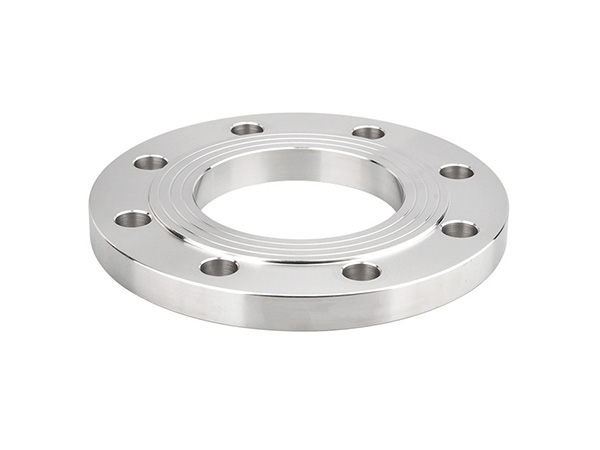
Slip On Flange
What is a Slip On Flange?
A slip on flange (SO flange) has a center bore that slides over the pipe, then is fillet-welded at both the hub end and the back side. It is easier to align than a weld neck flange and requires less precise pipe end preparation. Slip on flanges are widely used for low to medium pressure and temperature services where economy and quick installation are priorities.
Standards and Specifications
Slip on flanges are manufactured to ASME B16.5 and ASME B16.47, conforming to EN 1092 Type 02 and DIN standards. Sizes range from NPS 1/2 to NPS 24, with pressure classes 150, 300, 600, 900, and 1500. The bore is sized to match the pipe outer diameter with a small clearance for easy insertion. Faces include raised face (RF), flat face (FF), and ring type joint (RTJ).
Materials and Grades
Carbon steel A105 and Q235B are standard for general service. Stainless steel 304/304L and 316/316L provide corrosion resistance for chemical and marine applications. Alloy steel F11 and F22 grades handle high-temperature refinery service. Low-temperature grade A350 LF2 is available for refrigeration and cryogenic piping. All material is forged and fully traceable.
Pressure and Temperature Ratings
Slip on flanges are rated per ASME B16.5 pressure-temperature tables. They have lower pressure holding capacity than weld neck flanges due to the fillet-welded construction, but are suitable for Class 150 through 600 services. They perform well under moderate temperatures and are not recommended for severe cyclic or thermal shock conditions.
Applications
Slip on flanges are used in water supply, HVAC, compressed air, lubrication, fire protection, and general process piping. They are common in utility systems, skid-mounted equipment, and low-pressure oil and gas gathering lines where ease of alignment and lower cost outweigh the need for maximum pressure rating.
Advantages
Slip on flanges are easier to align and install than weld neck flanges because the pipe slides through the bore before welding. They require less field welding and are more economical for large-bore low-pressure piping. The bore clearance allows slight positional adjustment before the weld is made, simplifying fit-up in the field.
Installation Guidelines
Slide the flange onto the pipe, position it so the weld end extends the correct distance, and tack weld. Fillet weld both the hub side and the back side of the flange using the correct filler metal. Ensure the flange face is perpendicular to the pipe axis. Use proper gasket and bolt torque when assembling the joint to the mating flange.
Quality Assurance
Each slip on flange is marked with size, class, material grade, heat number, and manufacturer's stamp. Inspection includes dimensional checks, bore diameter verification, visual examination, and NDE when specified. Material test certificates to EN 10204 3.1 are provided. Flanges are coated with rust-preventive oil and the face is protected for shipping.