

Survival through Quality
PRODUCT CENTER
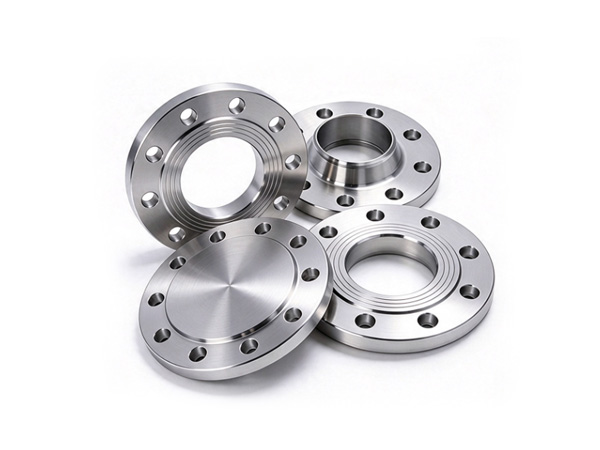
Plate Flange
What is a Plate Flange?
A plate flange, also known as a slip-on plate flange or flat welded flange, is a flat circular disk with a center hole that slides over the pipe and is fillet-welded at both the hub and the back side. It is the most economical and widely used flange type for low to moderate pressure piping. Plate flanges are easy to align and install, making them popular for water, air, lubrication, and general utility systems.
Standards and Specifications
Plate flanges are manufactured to EN 1092-1 Type 01, DIN 2573, BS 4504, and ASME B16.5 standards. Sizes range from DN15 to DN600 (NPS 1/2 to NPS 24), with pressure classes PN6, PN10, PN16, PN25, and Class 150 to 300. The face is typically flat face (FF) or raised face (RF), with bolt hole patterns matching the corresponding standard flange.
Materials and Grades
Carbon steel Q235B, Q345R, and A105 are standard plate flange materials. Stainless steel 304/304L and 316/316L provide corrosion resistance for chemical and food processing. The flange is typically cut from forged or rolled plate, then machined to the required dimensions. Material is fully traceable and supplied with mill certificates.
Pressure and Temperature Ratings
Plate flanges are rated for lower pressure classes compared with weld neck flanges, typically PN6 through PN25 and Class 150 through 300. The fillet-welded connection is suitable for moderate temperatures and non-critical services. They are not recommended for cyclic thermal loading, severe shock, or high-pressure high-temperature service where a weld neck flange would be specified.
Applications
Plate flanges are used in water supply and drainage, HVAC, compressed air, lubrication systems, fire protection, mild chemical piping, and general industrial utility lines. They are commonly found in low-pressure systems where cost, ease of installation, and ready availability are more important than extreme pressure performance.
Advantages
Plate flanges are the most economical flange option, requiring less machining and material than weld neck or threaded flanges. The pipe simply slips through the bore, making alignment quick and accurate. They are lighter and easier to handle for large-diameter low-pressure piping. Standard dimensions ensure interchangeability across suppliers.
Installation Guidelines
Slide the flange onto the pipe end, position it, and fillet weld both the hub side and the back side of the flange to the pipe. Ensure the flange face is perpendicular to the pipe axis. Use the correct gasket and bolt torque sequence when assembling the joint. For flat-face flanges, use a full-face gasket; for raised-face, use a ring gasket.
Quality Assurance
Each plate flange is marked with size, pressure rating, material grade, and manufacturer's identification. Inspection includes dimensional checks, face flatness, and visual examination. Material test certificates are provided. Flanges are coated with rust-preventive oil and the face is protected during shipping to prevent damage to the sealing surface.