

Survival through Quality
PRODUCT CENTER
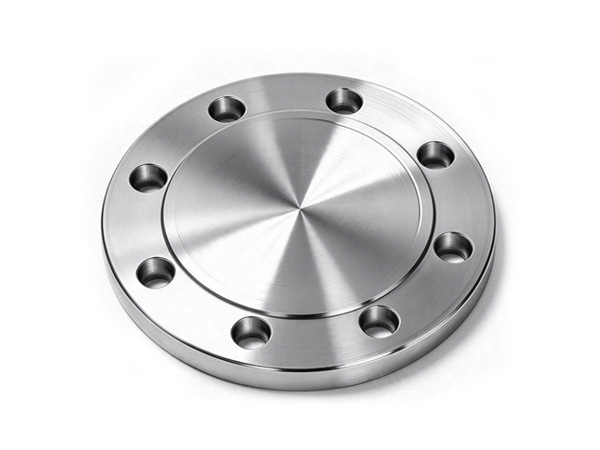
Blind Flange
What is a Blind Flange?
A blind flange is a solid disk used to seal the end of a pipe system, valve, or pressure vessel opening. It has no bore and is bolted between two flanged joints to provide a removable closure. Blind flanges allow easy access for future line extensions, inspection, or cleaning while maintaining pressure integrity. They are widely used in piping systems across oil, gas, chemical, and water industries.
Standards and Specifications
Blind flanges are manufactured to ASME B16.5 for pipe sizes NPS 1/2 through NPS 24, and ASME B16.47 for large diameters NPS 26 through NPS 60. They also conform to EN 1092, DIN 2527, and JIS standards. Pressure classes include 150, 300, 600, 900, 1500, and 2500. The face can be flat face (FF), raised face (RF), ring type joint (RTJ), or tongue-and-groove depending on the sealing requirement.
Materials and Grades
Carbon steel A105 and Q235B are standard for general service. Stainless steel 304/304L and 316/316L provide corrosion resistance for chemical and marine applications. Alloy steel F11, F22, and F91 grades handle high-temperature power and refinery service. Duplex and super duplex stainless steels are available for seawater and chloride environments. All material is fully traceable by heat number.
Pressure and Temperature Ratings
Blind flanges are rated per ASME B16.5 pressure-temperature tables. Because they are solid disks subject to bending stress, blind flanges require greater thickness than pipe flanges at the same pressure class. Thickness increases significantly with size and pressure rating. Each flange is hydrostatically tested and marked with class, size, material, and manufacturer's identification.
Applications
Blind flanges are used to terminate pipe lines, close vessel nozzles, seal valve ends, and isolate equipment for maintenance. They are found in oil and gas pipelines, refineries, chemical plants, water treatment, power generation, and shipbuilding. They are essential for pressure testing completed piping spools and for providing future tie-in points.
Advantages
Blind flanges provide a removable, re-usable closure that can be unbolted to extend the line or inspect the interior. They eliminate the need for welded end caps when future access may be required. Standard dimensions allow interchangeability across manufacturers. The raised face or RTJ groove ensures reliable sealing with the appropriate gasket under pressure and thermal cycling.
Installation Guidelines
Select the correct flange class and face type to match the mating flange. Install the proper gasket material and size, center the blind flange, and insert bolts in a staggered pattern. Torque bolts evenly in a cross-pattern to the specified value to achieve uniform gasket compression. For high-pressure or hazardous service, re-torque after initial pressure cycle.
Quality Assurance
Each blind flange is marked with size, class, material grade, heat number, and manufacturer's stamp. Inspection includes dimensional checks, ultrasonic testing, hardness testing, and NDE when specified. Material test certificates to EN 10204 3.1 are provided. Flanges are coated with rust-preventive oil and bolt holes are protected for shipping.