

Survival through Quality
PRODUCT CENTER
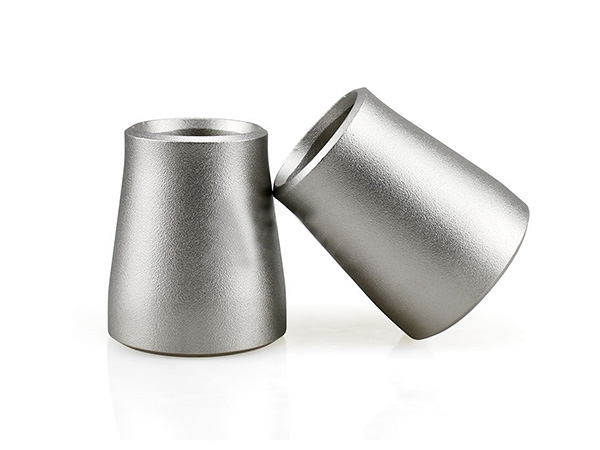
Stainless Steel Reducer
What is a Stainless Steel Reducer?
A stainless steel reducer is a concentric or eccentric butt-welded fitting used to connect pipes of different diameters in corrosive or hygienic service. Made from stainless steel, it resists oxidation, chemical attack, and pitting while providing a gradual flow transition. Stainless steel reducers are specified in chemical, food, pharmaceutical, marine, and clean-service piping.
Standards and Specifications
Stainless steel reducers are manufactured to ASME B16.9 and ASME B16.28, conforming to ASTM A403 WP grades and EN 10253. Available in concentric and eccentric patterns. Sizes range from NPS 1/2 by NPS 1/4 to NPS 48 by NPS 40, with wall schedules from SCH 10S to SCH XXS. Ends are beveled for butt welding.
Materials and Grades
Common grades are ASTM A403 WP304/304L and WP316/316L. 304/304L provides general corrosion resistance for food, beverage, and architectural use. 316/316L adds molybdenum for superior pitting and chloride resistance in marine and chemical service. Other grades include WP321, WP347, WP904L, and duplex WP32205 for specialized environments.
Pressure and Temperature Ratings
Stainless steel reducers perform from cryogenic temperatures up to approximately 800 degrees Celsius, with pressure classes 150 through 2500. Low-carbon L grades provide better intergranular corrosion resistance after welding. Each reducer is solution-annealed and pickled for maximum corrosion performance.
Applications
Stainless steel reducers are used in chemical processing, pharmaceutical plants, food and beverage production, water treatment, desalination, marine and offshore systems, and clean utility piping. They connect larger pipes to smaller equipment nozzles, pumps, and valves in corrosive media or hygienic process lines.
Advantages
Stainless steel reducers offer excellent corrosion resistance, high strength at elevated temperatures, and a smooth, hygienic surface. They resist oxidation and require no internal coating. The gradual taper minimizes turbulence and erosion. The material is fully recyclable.
Installation Guidelines
Use stainless steel filler metal matching the grade. Clean weld areas thoroughly. Use GTAW with argon backing gas inside the pipe to protect the root from oxidation. Post-weld pickling and passivation restore the protective chromium oxide layer. Avoid carbon steel contamination by using dedicated stainless tools.
Quality Assurance
Each stainless steel reducer is marked with both sizes, grade, heat number, wall thickness, and manufacturer's stamp. Inspection includes PMI, dimensional checks at both ends, wall thickness measurement, and NDE when specified. Material test certificates to EN 10204 3.1 are provided. Reducers are protected with plastic end caps and packed separately.