

Survival through Quality
PRODUCT CENTER
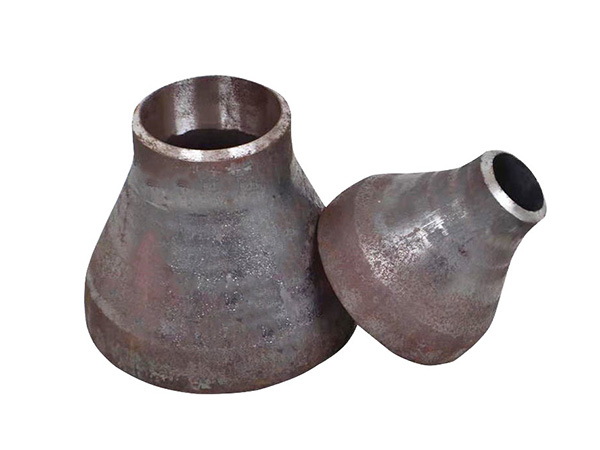
High Pressure Reducer
What is a High Pressure Reducer?
A high pressure reducer is a concentric or eccentric butt-welded fitting designed to connect pipes of different diameters in extreme pressure systems. Built with thick walls and a gradual taper, it reduces flow from a larger line to a smaller one while maintaining pressure integrity. High pressure reducers are specified in Class 900, 1500, and 2500 systems where standard reducers cannot meet pressure design requirements.
Standards and Specifications
High pressure reducers are manufactured to ASME B16.9 and ASME B16.28, with additional requirements per ASME B31.3. They also conform to MSS SP-75 and ASTM A234. Available in concentric and eccentric patterns. Sizes range from NPS 2 by NPS 1 to NPS 24 by NPS 12, with wall thickness calculated for the design pressure and temperature. Ends are beveled for butt welding.
Materials and Grades
Carbon steel A234 WPB and A105 are used for moderate-temperature high-pressure service. Alloy steel WP11, WP22, and WP91 grades handle high-temperature high-pressure applications in power and refinery service. Stainless steel 304/316 grades provide corrosion resistance in pressure chemical systems. Material is sourced from certified mills with thick-wall seamless tube.
Pressure and Temperature Ratings
High pressure reducers are rated for Class 900, 1500, and 2500 pressure classes, with temperature de-rating per ASME B16.5 tables. Carbon steel reducers handle up to 425 degrees Celsius, alloy steel reducers up to 600 degrees Celsius. Each reducer is hydrostatically tested at elevated pressure and ultrasonically examined.
Applications
High pressure reducers are used in high-pressure oil and gas gathering, injection wells, refinery catalytic units, power plant boiler feedwater systems, hydraulic pressure circuits, and high-pressure steam lines. They connect larger headers to smaller branch or equipment nozzles where pressure containment is critical.
Advantages
The heavy-wall design provides a substantial safety margin for pressure containment. The gradual taper minimizes turbulence, erosion, and flow separation at the diameter transition. Butt-welded construction provides full structural continuity. High pressure reducers eliminate the need for custom fabricated transitions in critical service.
Installation Guidelines
High pressure reducers require precise bevel preparation at both ends. Preheat to the specified temperature based on material and wall thickness. Use multi-pass welding with controlled interpass temperature and matching filler metal. Post-weld heat treatment is mandatory for alloy steel and thick carbon steel sections. Perform radiographic examination of both welds.
Quality Assurance
Each high pressure reducer is marked with both sizes, grade, heat number, wall thickness, pressure class, and manufacturer's stamp. Inspection includes PMI, ultrasonic thickness measurement, dimensional checks at both ends, hardness testing, 100 percent NDE, and hydrostatic testing. Material test certificates to EN 10204 3.2 are available. Reducers are coated with rust-preventive oil and bevel ends are capped.